


 Spotlight Radio
Advancements and Impact of Machine Translation in Global Communication
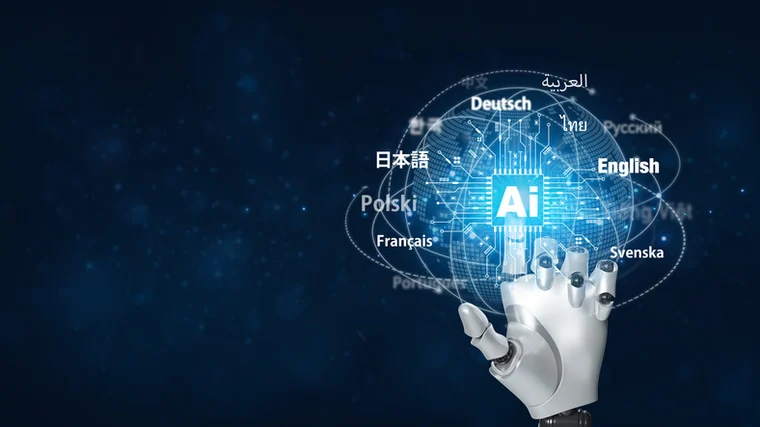
Machine Translation (MT) has emerged as a transformative technology in the realm of global communication, breaking language barriers and enabling real-time understanding across diverse cultures. By leveraging artificial intelligence (AI) and natural language processing (NLP), MT systems can automatically translate text or speech from one language to another, significantly reducing the dependency on human translators. The evolution of MT has shifted from rule-based approaches, which relied heavily on linguistic rules and dictionaries, to statistical and neural methods that learn patterns from vast datasets. This shift has dramatically enhanced translation accuracy and fluency, making MT an indispensable tool for businesses, governments, and individuals worldwide.
In recent years, neural machine translation (NMT) has revolutionized the MT landscape by employing deep learning algorithms to understand context and generate more natural translations. Unlike earlier methods that translated sentence fragments independently, NMT models consider entire sentences and paragraphs, ensuring consistency and grammatical correctness. This technology is widely integrated into online platforms, such as social media, e-commerce sites, and global communication apps, allowing users to instantly access content in their preferred language. Additionally, MT is increasingly being used in professional settings to support multilingual documentation, customer service, and international collaboration, enhancing efficiency and reducing operational costs.
Source - https://www.marketresearchfuture.com/reports/machine-translation-market-23411
Despite its remarkable progress, MT faces challenges that impact translation quality. Ambiguities in language, idiomatic expressions, and cultural nuances can still lead to errors or misinterpretations. Moreover, specialized domains such as legal, medical, or technical content often require domain-specific training to achieve reliable translations. Researchers are actively addressing these challenges by developing hybrid MT systems that combine human expertise with AI, as well as incorporating context-aware and adaptive learning mechanisms. Continuous improvements in training datasets, algorithms, and computational power are further narrowing the gap between human and machine translation capabilities, making MT increasingly reliable for critical applications.
Machine Translation (MT) has emerged as a transformative technology in the realm of global communication, breaking language barriers and enabling real-time understanding across diverse cultures. By leveraging artificial intelligence (AI) and natural language processing (NLP), MT systems can automatically translate text or speech from one language to another, significantly reducing the dependency on human translators. The evolution of MT has shifted from rule-based approaches, which relied heavily on linguistic rules and dictionaries, to statistical and neural methods that learn patterns from vast datasets. This shift has dramatically enhanced translation accuracy and fluency, making MT an indispensable tool for businesses, governments, and individuals worldwide.
In recent years, neural machine translation (NMT) has revolutionized the MT landscape by employing deep learning algorithms to understand context and generate more natural translations. Unlike earlier methods that translated sentence fragments independently, NMT models consider entire sentences and paragraphs, ensuring consistency and grammatical correctness. This technology is widely integrated into online platforms, such as social media, e-commerce sites, and global communication apps, allowing users to instantly access content in their preferred language. Additionally, MT is increasingly being used in professional settings to support multilingual documentation, customer service, and international collaboration, enhancing efficiency and reducing operational costs.
Source - https://www.marketresearchfuture.com/reports/machine-translation-market-23411
Despite its remarkable progress, MT faces challenges that impact translation quality. Ambiguities in language, idiomatic expressions, and cultural nuances can still lead to errors or misinterpretations. Moreover, specialized domains such as legal, medical, or technical content often require domain-specific training to achieve reliable translations. Researchers are actively addressing these challenges by developing hybrid MT systems that combine human expertise with AI, as well as incorporating context-aware and adaptive learning mechanisms. Continuous improvements in training datasets, algorithms, and computational power are further narrowing the gap between human and machine translation capabilities, making MT increasingly reliable for critical applications.
Advancements and Impact of Machine Translation in Global Communication
Machine Translation (MT) has emerged as a transformative technology in the realm of global communication, breaking language barriers and enabling real-time understanding across diverse cultures. By leveraging artificial intelligence (AI) and natural language processing (NLP), MT systems can automatically translate text or speech from one language to another, significantly reducing the dependency on human translators. The evolution of MT has shifted from rule-based approaches, which relied heavily on linguistic rules and dictionaries, to statistical and neural methods that learn patterns from vast datasets. This shift has dramatically enhanced translation accuracy and fluency, making MT an indispensable tool for businesses, governments, and individuals worldwide.
In recent years, neural machine translation (NMT) has revolutionized the MT landscape by employing deep learning algorithms to understand context and generate more natural translations. Unlike earlier methods that translated sentence fragments independently, NMT models consider entire sentences and paragraphs, ensuring consistency and grammatical correctness. This technology is widely integrated into online platforms, such as social media, e-commerce sites, and global communication apps, allowing users to instantly access content in their preferred language. Additionally, MT is increasingly being used in professional settings to support multilingual documentation, customer service, and international collaboration, enhancing efficiency and reducing operational costs.
Source - https://www.marketresearchfuture.com/reports/machine-translation-market-23411
Despite its remarkable progress, MT faces challenges that impact translation quality. Ambiguities in language, idiomatic expressions, and cultural nuances can still lead to errors or misinterpretations. Moreover, specialized domains such as legal, medical, or technical content often require domain-specific training to achieve reliable translations. Researchers are actively addressing these challenges by developing hybrid MT systems that combine human expertise with AI, as well as incorporating context-aware and adaptive learning mechanisms. Continuous improvements in training datasets, algorithms, and computational power are further narrowing the gap between human and machine translation capabilities, making MT increasingly reliable for critical applications.
0 Comments
0 Shares
284 Views

