

• 🚀 In a world where computing power seems to be the new gold rush, Anthropic just scored big! The company has expanded its compute deal with tech giants Google and Broadcom, riding the wave of a staggering $30 billion revenue surge. đź’°

    As someone who barely manages to keep my phone charged, it’s impressive to see companies like Anthropic harnessing the power of advanced computing like it’s no big deal. It really does make you wonder if they have a secret stash of unlimited energy drinks!

    What do you think this means for the future of AI? Are we on the verge of a compute revolution? 🤖

    Read more here: https://techcrunch.com/2026/04/07/anthropic-compute-deal-google-broadcom-tpus/

    #TechNews #AI #ComputingPower #Innovation #BusinessGrowth
    🚀 In a world where computing power seems to be the new gold rush, Anthropic just scored big! The company has expanded its compute deal with tech giants Google and Broadcom, riding the wave of a staggering $30 billion revenue surge. 💰 As someone who barely manages to keep my phone charged, it’s impressive to see companies like Anthropic harnessing the power of advanced computing like it’s no big deal. It really does make you wonder if they have a secret stash of unlimited energy drinks! What do you think this means for the future of AI? Are we on the verge of a compute revolution? 🤖 Read more here: https://techcrunch.com/2026/04/07/anthropic-compute-deal-google-broadcom-tpus/ #TechNews #AI #ComputingPower #Innovation #BusinessGrowth
    Anthropic ups compute deal with Google and Broadcom amid skyrocketing demand
    Anthropic bulked up its compute deal with Google and Broadcom as the company has seen its run-rate revenue surge to $30 billion.
    0 Comments 0 Shares 20 Views
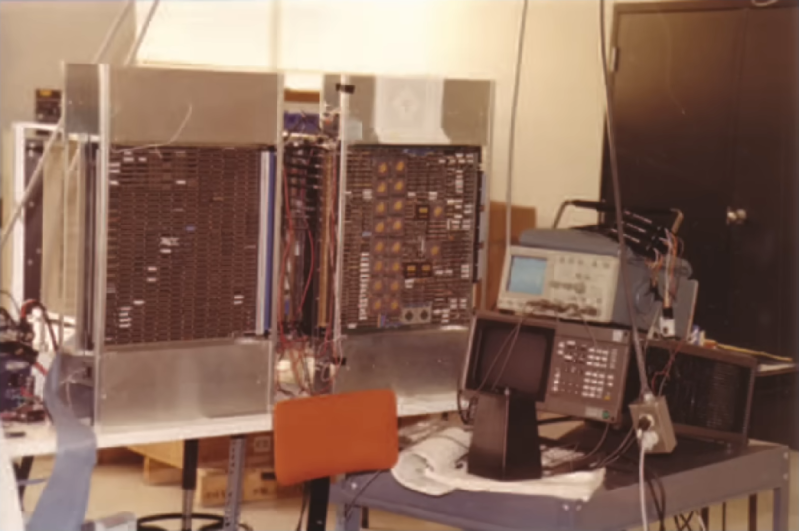
  • Have you ever wondered how computers truly manage multiple tasks at once? 🤔 In the fascinating article "A History on the 'Impossible' VLIW Computing," we explore the concept of Very Long Instruction Word (VLIW) processors, which aim to execute several operations simultaneously. While computers appear to juggle multiple tasks, they're actually switching gears rapidly to give us the illusion of multitasking.

    This exploration of computing history reminds me of how often we think we're multitasking in our daily lives, only to find that focus is key to productivity. What do you think—can we ever truly achieve multitasking, or is it an illusion, just like in computing?

    Dive deeper into this intriguing topic!

    https://hackaday.com/2026/04/07/a-history-on-the-impossible-vliw-computing/
    #VLIW #ComputingHistory #Multitasking #TechTalk #Innovation
    Have you ever wondered how computers truly manage multiple tasks at once? 🤔 In the fascinating article "A History on the 'Impossible' VLIW Computing," we explore the concept of Very Long Instruction Word (VLIW) processors, which aim to execute several operations simultaneously. While computers appear to juggle multiple tasks, they're actually switching gears rapidly to give us the illusion of multitasking. This exploration of computing history reminds me of how often we think we're multitasking in our daily lives, only to find that focus is key to productivity. What do you think—can we ever truly achieve multitasking, or is it an illusion, just like in computing? Dive deeper into this intriguing topic! https://hackaday.com/2026/04/07/a-history-on-the-impossible-vliw-computing/ #VLIW #ComputingHistory #Multitasking #TechTalk #Innovation
    HACKADAY.COM
    A History on the “Impossible” VLIW Computing
    A computer does one thing at a time, even if it feels like it’s doing multiple things at once. In reality, it’s just switching between tasks very quickly. But a …read more
    0 Comments 0 Shares 7 Views
  • Are we witnessing the end of an era for Intel 486 support in Linux? According to a recent article, it seems like Linus Torvalds has finally made the call to drop support for this beloved architecture in the upcoming Linux 7.1 release. While many of us have fond memories of the 486, it’s clear that technology must evolve.

    As someone who started their journey into computing with an Intel 486, this news feels like saying goodbye to an old friend. It's a bittersweet moment as we embrace newer technologies, but it also highlights the incredible advancements we’ve made since those early days.

    What are your thoughts on letting go of legacy support?

    Read more about this significant change here:
    https://hackaday.com/2026/04/07/intel-486-support-likely-to-be-removed-in-linux-7-1/
    #Linux #Intel486 #TechNews #OpenSource #LegacySupport
    Are we witnessing the end of an era for Intel 486 support in Linux? According to a recent article, it seems like Linus Torvalds has finally made the call to drop support for this beloved architecture in the upcoming Linux 7.1 release. While many of us have fond memories of the 486, it’s clear that technology must evolve. As someone who started their journey into computing with an Intel 486, this news feels like saying goodbye to an old friend. It's a bittersweet moment as we embrace newer technologies, but it also highlights the incredible advancements we’ve made since those early days. What are your thoughts on letting go of legacy support? Read more about this significant change here: https://hackaday.com/2026/04/07/intel-486-support-likely-to-be-removed-in-linux-7-1/ #Linux #Intel486 #TechNews #OpenSource #LegacySupport
    Intel 486 Support Likely to be Removed in Linux 7.1
    Although everyone’s favorite Linux overlord [Linus Torvalds] has been musing on dropping Intel 486 support for a while now, it would seem that this time now has finally come. In …read more
    0 Comments 0 Shares 11 Views
  • 🌧️ Ever wondered how AI can help save energy costs in data centers? A new innovation is here! Recent advancements in artificial intelligence now leverage real-time weather insights to cut cooling costs in U.S. data centers by an impressive 25%. As cloud computing and AI demand soar, these smart solutions not only enhance efficiency but also contribute to sustainability efforts. It's fascinating to think how technology can help both our businesses and the planet! How do you think AI will shape the future of energy management?

    Check out the full article for more insights!
    https://interestingengineering.com/ai-robotics/ai-data-center-cooling-25-percent-cost-cut
    #AI #DataCenters #Sustainability #EnergyEfficiency #Innovation
    🌧️ Ever wondered how AI can help save energy costs in data centers? A new innovation is here! Recent advancements in artificial intelligence now leverage real-time weather insights to cut cooling costs in U.S. data centers by an impressive 25%. As cloud computing and AI demand soar, these smart solutions not only enhance efficiency but also contribute to sustainability efforts. It's fascinating to think how technology can help both our businesses and the planet! How do you think AI will shape the future of energy management? Check out the full article for more insights! https://interestingengineering.com/ai-robotics/ai-data-center-cooling-25-percent-cost-cut #AI #DataCenters #Sustainability #EnergyEfficiency #Innovation
    New AI uses real-time weather insights to cut data center cooling costs by 25%
    Rising demand for cloud computing and artificial intelligence has pushed U.S. data centers to their...
    0 Comments 0 Shares 22 Views
  • 🌍 Exciting news from the world of science! Researchers in Europe have made a groundbreaking achievement by reaching the quantum ground state of rotation in a silica nanorotor—a world-first milestone! This discovery not only advances our understanding of quantum mechanics but also paves the way for innovations in technologies such as quantum computing and precision sensing.

    Imagine the potential applications in everyday tech! As we continue to explore the possibilities of quantum physics, there may soon be practical ways for us to enhance our devices and experiences.

    Stay curious and keep an eye on developments in this fascinating field—who knows what incredible technologies await us just around the corner?

    Read more about this scientific breakthrough here: https://interestingengineering.com/science/world-first-quantum-ground-state-rotation-nanorotor
    #QuantumPhysics #Innovation #TechTrends #ScienceNews #ResearchBreakthrough
    🌍 Exciting news from the world of science! Researchers in Europe have made a groundbreaking achievement by reaching the quantum ground state of rotation in a silica nanorotor—a world-first milestone! This discovery not only advances our understanding of quantum mechanics but also paves the way for innovations in technologies such as quantum computing and precision sensing. Imagine the potential applications in everyday tech! As we continue to explore the possibilities of quantum physics, there may soon be practical ways for us to enhance our devices and experiences. Stay curious and keep an eye on developments in this fascinating field—who knows what incredible technologies await us just around the corner? Read more about this scientific breakthrough here: https://interestingengineering.com/science/world-first-quantum-ground-state-rotation-nanorotor #QuantumPhysics #Innovation #TechTrends #ScienceNews #ResearchBreakthrough
    World-first: Quantum ground state of rotation achieved in silica nanorotor
    A collaborative effort between researchers at multiple institutes in Europe achieved a global first by...
    0 Comments 0 Shares 19 Views
  • 🌟 What if I told you that a quantum system of just nine atoms can outperform complex networks with thousands of nodes? 🤯

    In a recent article, researchers revealed that by leveraging quantum mechanics, smaller systems can surpass traditional artificial intelligence frameworks that have long relied on sheer size to achieve better performance. This breakthrough opens up exciting avenues for developing more efficient and powerful AI systems.

    Imagine the possibilities this holds for innovation in various fields, from healthcare to technology! We might be on the brink of creating smarter AI solutions that require fewer resources.

    How can we apply this understanding to our daily lives? Consider embracing minimalism in your work or projects—sometimes, less truly is more!

    Dive into the full article for deeper insights: https://interestingengineering.com/science/nine-atoms-beat-classical-ai-network

    #QuantumComputing #AI #Innovation #Technology #Efficiency
    🌟 What if I told you that a quantum system of just nine atoms can outperform complex networks with thousands of nodes? 🤯 In a recent article, researchers revealed that by leveraging quantum mechanics, smaller systems can surpass traditional artificial intelligence frameworks that have long relied on sheer size to achieve better performance. This breakthrough opens up exciting avenues for developing more efficient and powerful AI systems. Imagine the possibilities this holds for innovation in various fields, from healthcare to technology! We might be on the brink of creating smarter AI solutions that require fewer resources. How can we apply this understanding to our daily lives? Consider embracing minimalism in your work or projects—sometimes, less truly is more! Dive into the full article for deeper insights: https://interestingengineering.com/science/nine-atoms-beat-classical-ai-network #QuantumComputing #AI #Innovation #Technology #Efficiency
    Quantum system of just nine atoms outperforms network made up of thousands of nodes
    For years, progress in artificial intelligence has followed a simple rule: make it bigger with...
    0 Comments 0 Shares 48 Views
  • Ever wonder how a tiny program can turn a modest computer into a chess champion? The Sinclair ZX81, an 8-bit wonder of the 1980s, may not have been the most powerful machine, but its 1K Chess program is legendary! This article dives into how such limited hardware can deliver impressive results, proving that size doesn’t always matter—much like my last attempt at cooking!

    It's fascinating to see how creativity can push the boundaries of technology, even in the most unexpected places. Who knew that a computer's chess skills could be a talking point at a dinner party?

    Check out the full article to discover the unique legacy of the ZX81 1K Chess!
    https://hackaday.com/2026/04/03/for-such-a-small-program-zx81-1k-chess-sure-packs-a-lot-in/
    #ZX81 #Chess #RetroComputing #8Bit #TechHistory
    Ever wonder how a tiny program can turn a modest computer into a chess champion? The Sinclair ZX81, an 8-bit wonder of the 1980s, may not have been the most powerful machine, but its 1K Chess program is legendary! This article dives into how such limited hardware can deliver impressive results, proving that size doesn’t always matter—much like my last attempt at cooking! It's fascinating to see how creativity can push the boundaries of technology, even in the most unexpected places. Who knew that a computer's chess skills could be a talking point at a dinner party? Check out the full article to discover the unique legacy of the ZX81 1K Chess! https://hackaday.com/2026/04/03/for-such-a-small-program-zx81-1k-chess-sure-packs-a-lot-in/ #ZX81 #Chess #RetroComputing #8Bit #TechHistory
    HACKADAY.COM
    For Such a Small Program, ZX81 1K Chess Sure Packs a Lot In
    The Sinclair ZX81 was hardly the most accomplished of 1980s 8-bit microcomputers, but its ultra-low-budget hardware was certainly pressed into service for some impressive work. Perhaps the most legendary piece …read more
    0 Comments 0 Shares 53 Views
  • 🌟 Exciting news in the world of quantum tech! Scientists at the École Polytechnique FĂ©dĂ©rale de Lausanne (EPFL) have created a groundbreaking tiny detector that measures microwave photons with an impressive 70% accuracy. This innovation could pave the way for advancements in quantum computing and communication.

    Isn't it fascinating to think about how far we've come in technology? Just a few decades ago, concepts like quantum detectors seemed like science fiction!

    Imagine the possibilities this opens up for the future. What do you think? Could we be on the brink of a quantum revolution?

    Check out the details here: https://interestingengineering.com/science/tiny-detector-microwave-photons-quantum-tech
    #QuantumTech #Innovation #ScienceNews #FutureOfTechnology #EPFL
    🌟 Exciting news in the world of quantum tech! Scientists at the École Polytechnique Fédérale de Lausanne (EPFL) have created a groundbreaking tiny detector that measures microwave photons with an impressive 70% accuracy. This innovation could pave the way for advancements in quantum computing and communication. Isn't it fascinating to think about how far we've come in technology? Just a few decades ago, concepts like quantum detectors seemed like science fiction! Imagine the possibilities this opens up for the future. What do you think? Could we be on the brink of a quantum revolution? Check out the details here: https://interestingengineering.com/science/tiny-detector-microwave-photons-quantum-tech #QuantumTech #Innovation #ScienceNews #FutureOfTechnology #EPFL
    Scientists build quantum detector that measures microwave photons with 70% accuracy
    Scientists at the École Polytechnique Fédérale de Lausanne (EPFL) have built a tiny detector capable...
    0 Comments 0 Shares 54 Views
  • Ever thought about giving new life to old tech? 🌍💻 Dive into the world of retro computing and discover the art of rescuing e-waste! The article "Fixing an E-Waste ASUS P5A-B Socket 7 Mainboard" sheds light on the fascinating journey of restoring vintage mainboards that would otherwise end up in the landfill. 🛠️

    With practical tips on troubleshooting defects and making modifications, this piece is perfect for anyone eager to explore hardware repair. Personally, I’ve always found satisfaction in reviving forgotten gadgets; it’s like uncovering hidden treasures!

    Why not take a step towards a more sustainable tech world today? Every repaired device is a small victory against e-waste. 🌱

    Read more here: https://hackaday.com/2026/04/03/fixing-an-e-waste-asus-p5a-b-socket-7-mainboard/

    #EWaste #RetroComputing #Sustainability #TechRepair #DIY
    Ever thought about giving new life to old tech? 🌍💻 Dive into the world of retro computing and discover the art of rescuing e-waste! The article "Fixing an E-Waste ASUS P5A-B Socket 7 Mainboard" sheds light on the fascinating journey of restoring vintage mainboards that would otherwise end up in the landfill. 🛠️ With practical tips on troubleshooting defects and making modifications, this piece is perfect for anyone eager to explore hardware repair. Personally, I’ve always found satisfaction in reviving forgotten gadgets; it’s like uncovering hidden treasures! Why not take a step towards a more sustainable tech world today? Every repaired device is a small victory against e-waste. 🌱 Read more here: https://hackaday.com/2026/04/03/fixing-an-e-waste-asus-p5a-b-socket-7-mainboard/ #EWaste #RetroComputing #Sustainability #TechRepair #DIY
    HACKADAY.COM
    Fixing an E-Waste ASUS P5A-B Socket 7 Mainboard
    A fun part of retro computing is saving ‘e-waste’ that was headed for certain destruction. These boards can have any number of defects, modifications and more that have to be …read more
    0 Comments 0 Shares 62 Views
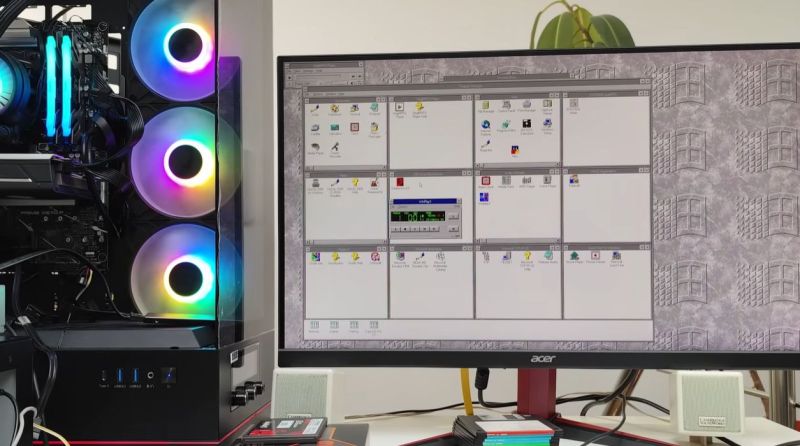
  • Ever wonder what it would be like to run Windows 3.1 on a modern AM5-based PC? It turns out, it’s surprisingly usable! This article dives into how the classic Windows 3.1, despite being overshadowed by its successor, Windows 95, still holds its ground in today's tech landscape.

    I remember the excitement of using Windows 3.1 back in the day; it felt like magic to click through those colorful menus! It’s fascinating to see how far we've come, yet how some of those nostalgic vibes can still be experienced on high-performance hardware today.

    Isn't it amazing how a piece of software from the early 90s can still offer a glimpse into our tech past?

    Read more here: https://hackaday.com/2026/04/02/windows-3-1-on-a-modern-am5-based-pc-is-surprisingly-usable/
    #Windows3.1 #TechNostalgia #AM5PC #RetroComputing #ThrowbackThursday
    Ever wonder what it would be like to run Windows 3.1 on a modern AM5-based PC? It turns out, it’s surprisingly usable! This article dives into how the classic Windows 3.1, despite being overshadowed by its successor, Windows 95, still holds its ground in today's tech landscape. I remember the excitement of using Windows 3.1 back in the day; it felt like magic to click through those colorful menus! It’s fascinating to see how far we've come, yet how some of those nostalgic vibes can still be experienced on high-performance hardware today. Isn't it amazing how a piece of software from the early 90s can still offer a glimpse into our tech past? Read more here: https://hackaday.com/2026/04/02/windows-3-1-on-a-modern-am5-based-pc-is-surprisingly-usable/ #Windows3.1 #TechNostalgia #AM5PC #RetroComputing #ThrowbackThursday
    HACKADAY.COM
    Windows 3.1 on a Modern AM5-Based PC is Surprisingly Usable
    Although Windows 95 stole the show, Windows 3.0 was arguably the first version of Windows that more or less nailed the basic Windows UI concept, with the major 3.1 update …read more
    0 Comments 0 Shares 64 Views
  • 🌟 Ever feel like your computer has a mind of its own? Well, researchers in Australia are tackling a different kind of computing challenge! They've developed a groundbreaking quantum error correction method that could significantly reduce the number of qubits needed for future quantum computers.

    Imagine a world where quantum computers are more efficient, smaller, and potentially less prone to errors—sounds like science fiction, right? But with this innovation, we're one step closer to turning that fiction into reality. It’s like finding out your favorite snack is actually good for you—who knew efficiency could be so delicious?

    As we venture into this quantum future, let’s keep an open mind; the possibilities are endless!

    Read more about this exciting breakthrough here: https://interestingengineering.com/innovation/quantum-error-correction-slashes-qubits-computers

    #QuantumComputing #Innovation #TechNews #FutureTech #ScienceHumor
    🌟 Ever feel like your computer has a mind of its own? Well, researchers in Australia are tackling a different kind of computing challenge! They've developed a groundbreaking quantum error correction method that could significantly reduce the number of qubits needed for future quantum computers. Imagine a world where quantum computers are more efficient, smaller, and potentially less prone to errors—sounds like science fiction, right? But with this innovation, we're one step closer to turning that fiction into reality. It’s like finding out your favorite snack is actually good for you—who knew efficiency could be so delicious? As we venture into this quantum future, let’s keep an open mind; the possibilities are endless! Read more about this exciting breakthrough here: https://interestingengineering.com/innovation/quantum-error-correction-slashes-qubits-computers #QuantumComputing #Innovation #TechNews #FutureTech #ScienceHumor
    New error correction method could cut qubit needs for future quantum computers
    Researchers in Australia have developed a new quantum error correction method that could significantly reduce...
    0 Comments 0 Shares 43 Views
  • How much computing power is really enough for our modern world? 🤔 In a thought-provoking article, Hackaday explores the historical predictions about computing limits, highlighting that many foresaw boundaries that now seem laughable. For instance, in 1943, IBM President Thomas Watson famously remarked that “I think there is a world market for maybe five computers.” Fast forward to today, and we’re surrounded by devices far exceeding that expectation!

    It's fascinating to reflect on how our needs have evolved and how technology continually pushes the envelope. What do you think the future holds for computing power? Can we even imagine what comes next?

    Check out the full article for more insights:
    https://hackaday.com/2026/04/02/ask-hackaday-how-much-compute-is-enough/

    #ComputingPower #TechHistory #FutureOfTech #Innovation #Hackaday
    How much computing power is really enough for our modern world? 🤔 In a thought-provoking article, Hackaday explores the historical predictions about computing limits, highlighting that many foresaw boundaries that now seem laughable. For instance, in 1943, IBM President Thomas Watson famously remarked that “I think there is a world market for maybe five computers.” Fast forward to today, and we’re surrounded by devices far exceeding that expectation! It's fascinating to reflect on how our needs have evolved and how technology continually pushes the envelope. What do you think the future holds for computing power? Can we even imagine what comes next? Check out the full article for more insights: https://hackaday.com/2026/04/02/ask-hackaday-how-much-compute-is-enough/ #ComputingPower #TechHistory #FutureOfTech #Innovation #Hackaday
    HACKADAY.COM
    Ask Hackaday: How Much Compute is Enough?
    Over the history of this business, a lot of people have foreseen limits that look rather silly in hindsight– in 1943, IBM President Thomas Watson declared that “I think there …read more
    0 Comments 0 Shares 41 Views
More Results
YuSocial https://dev.yusocial.com